

Key Takeaways
- Strong frontline communication reduces downtime, errors, and safety risks.
- Manufacturing relies on real time coordination across operators, technicians, and supervisors.
- Clear communication accelerates response time and improves production flow.
- Walt Smart Radio System by weavix provides visibility, translation, and documentation that strengthen frontline coordination.
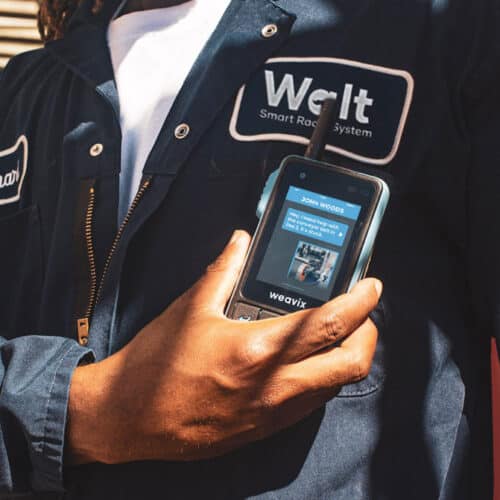
Frontline workforce communication in manufacturing is essential for maintaining production flow, preventing safety incidents, and ensuring accurate execution of work across shifts. Manufacturing facilities rely on operators, technicians, material handlers, and supervisors to coordinate activities in real time. Any delay or miscommunication can result in downtime, scrap, safety risks, or incomplete shift handoffs. The Walt Smart Radio System by weavix improves communication speed, clarity, and visibility, allowing teams to resolve issues faster and keep production stable.
Effective communication is a foundational requirement for manufacturing performance and workforce safety.
Why does frontline communication affect production performance?
Manufacturing lines depend on continuous coordination. Even small delays in communication can lead to:
- Slower maintenance response
- Incorrect task execution
- Idle equipment
- Material shortages on the line
- Misaligned workflows between departments
Clear, real time communication enables workers to solve issues faster, adjust tasks as conditions change, and keep production running without interruption.
Why is communication critical for safety in manufacturing?
Manufacturing environments contain moving equipment, hazardous materials, and high noise zones. Workers need immediate access to supervisors and safety teams when hazards appear. Strong communication improves:
- Speed of emergency response
- Accuracy of hazard reporting
- Visibility into worker location
- Coordination during evacuations or incidents
Tools like the Walt Smart Radio System support this through SOS alerts, man down detection, and GPS visibility.
How does communication support maintenance and troubleshooting?
Frontline workers often identify equipment issues before they escalate. When communication is slow or unclear, problems spread and increase downtime. Effective communication provides technicians with:
- Real time descriptions
- Photos or videos of conditions
- Precise timestamps
- Immediate access to operators
This improves first time fix rates and reduces repeated visits.
How does communication improve shift handoffs?
Manufacturing plants run multiple shifts that must exchange accurate information. Without documented communication, teams lose context about:
- In progress tasks
- Maintenance backlog
- Quality issues
- Material shortages
- Safety concerns
The Walt Smart Radio System logs transcripts and time stamped communication so incoming shifts receive complete, reliable information.
How does communication support multilingual or temporary labor forces?
Manufacturing often relies on multilingual teams, contractors, and rotating labor. Real time translation and simplified communication tools reduce errors caused by language barriers. Workers understand instructions the first time, improving quality and safety outcomes.
The Walt Smart Radio System provides translation across more than 40 languages with no apps or smartphones required.
Why does clear communication reduce operational risk?
Communication failures in manufacturing often lead to:
- Incorrect machine settings
- Missed quality checks
- Unsafe conditions
- Delayed responses
- Inefficient labor allocation
Strong communication gives leaders visibility into developing issues so they can intervene before problems spread.