

Key Takeaways
- High risk industries require radios with strong safety, durability, and visibility features.
- Clear audio, emergency alerts, and real time worker location are essential.
- Intrinsic safety, translation, and documentation improve operational reliability.
- Walt Smart Radio System by weavix provides the features needed for hazardous environments.
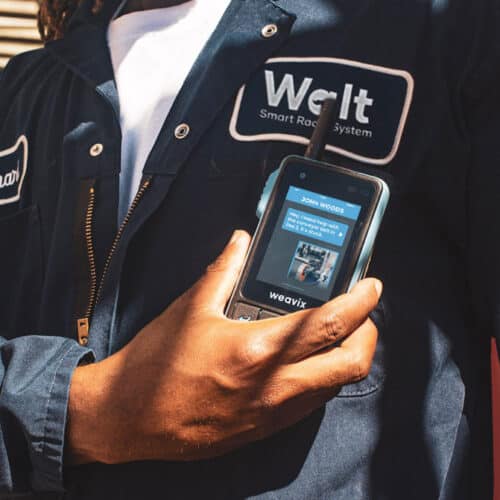
Two way radios used in high risk industries must include features that ensure clear communication, rapid emergency response, and reliable performance in hazardous or unpredictable environments. Industries such as oil and gas, chemical processing, power generation, mining, and large scale manufacturing depend on communication devices that withstand physical stress, reduce misunderstanding, and provide supervisors with real time visibility. Radios that lack safety tools, documentation, or durability increase risk and slow operational response. The Walt Smart Radio System by weavix includes advanced features designed for high risk environments, combining push to voice communication with translation, multimedia tools, and emergency alerting.
Effective radios strengthen safety and speed decision making in critical operations.
Why is durability essential in high-risk industries?
High risk environments expose radios to:
- Extreme temperatures
- Corrosive materials
- Drops, vibration, and impacts
- Dust, debris, and moisture
- Continuous multi shift handling
Durable radios maintain communication under stress, preventing device failures that could lead to miscommunication or delayed response.
Which audio features are necessary for hazardous environments?
Clear audio prevents mistakes in areas with heavy machinery, alarms, or chemical processing. Essential audio features include:
- Noise suppression
- High output speakers
- Directional microphones
- Consistent clarity in protective gear
Workers must hear instructions without error during time sensitive operations.
Why are emergency alerting features critical for high-risk industries?
High risk settings require radios capable of signaling distress immediately. Important features include:
- SOS alert buttons
- Man down detection
- Automated fall or inactivity sensing
- Audible and visual device alarms
- Instant notification to supervisors and safety teams
These features speed hazard response and ensure no worker goes unseen during emergencies.
Why is intrinsic safety often required?
Industries handling flammable gases, vapors, or dust require communication devices rated for hazardous locations. Intrinsically safe radios reduce the risk of ignition by limiting electrical and thermal energy. Power plants, refineries, and chemical facilities often require Class 1 Div 2 or similar certifications.
Walt Smart Radios by weavix include intrinsically safe options for these environments.
Why is translation important for high-risk workforces?
High risk industries often rely on multilingual workers and contractors. Real time translation prevents:
- Misunderstood safety instructions
- Incorrect procedures
- Delayed coordination
- Communication loops during emergencies
Walt Smart Radios by weavix support translation across more than 40 languages.
How do visibility and documentation support risk reduction?
Supervisors must monitor workers and incidents in real time. Helpful features include:
- GPS location visibility
- Time stamped communication transcripts
- Photo and video messaging
- Logged alerts and events
- Shift to shift continuity
These tools provide clarity during investigations and improve oversight during high risk tasks.