


Featured Blogs

Blog
The Manufacturing Iceberg: Why Traditional Communication Systems Can’t See What’s Sinking Your Operations
At this very moment, somewhere on your plant floor, a disengaged worker is going through the motions, a near-miss is going unreported, and critical tribal knowledge just walked out the…

Blog
Weavix Walt Smart Radio vs RelayX: A Head-to-Head Comparison for Manufacturing
Comparing weavix Walt Smart Radio to RelayX comes down to one difference that drives ROI: Walt turns frontline communication into searchable, reusable data, while RelayX conversations disappear. Below is a…

Blog
Push to Talk Walkie Talkie: What It Is and Why It Matters
Frontline teams depend on clear, instant communication, but most push-to-talk radios create familiar frustrations — complex devices, spotty coverage, and poor integration with digital workflows. As production demands climb and…
-
The Manufacturing Iceberg: Why Traditional Communication Systems Can’t See What’s Sinking Your Operations

Blog
The Manufacturing Iceberg: Why Traditional Communication Systems Can’t See What’s Sinking Your Operations
Learn MoreAt this very moment, somewhere on your plant floor, a disengaged worker is going through the motions, a near-miss is going unreported, and critical tribal knowledge just walked out the…
-
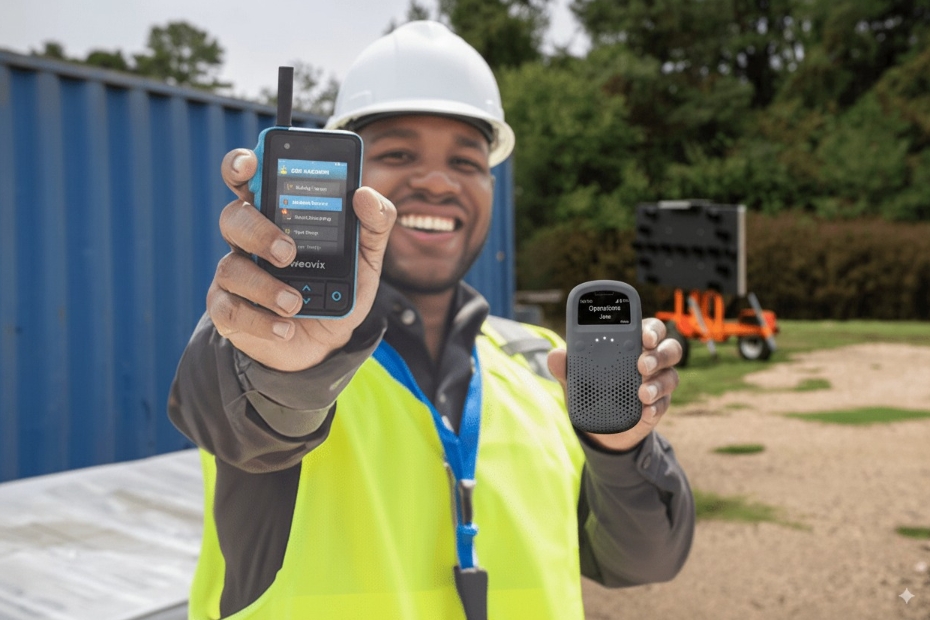
Weavix Walt Smart Radio vs RelayX: A Head-to-Head Comparison for Manufacturing
Blog
Weavix Walt Smart Radio vs RelayX: A Head-to-Head Comparison for Manufacturing
Learn MoreComparing weavix Walt Smart Radio to RelayX comes down to one difference that drives ROI: Walt turns frontline communication into searchable, reusable data, while RelayX conversations disappear. Below is a…
-
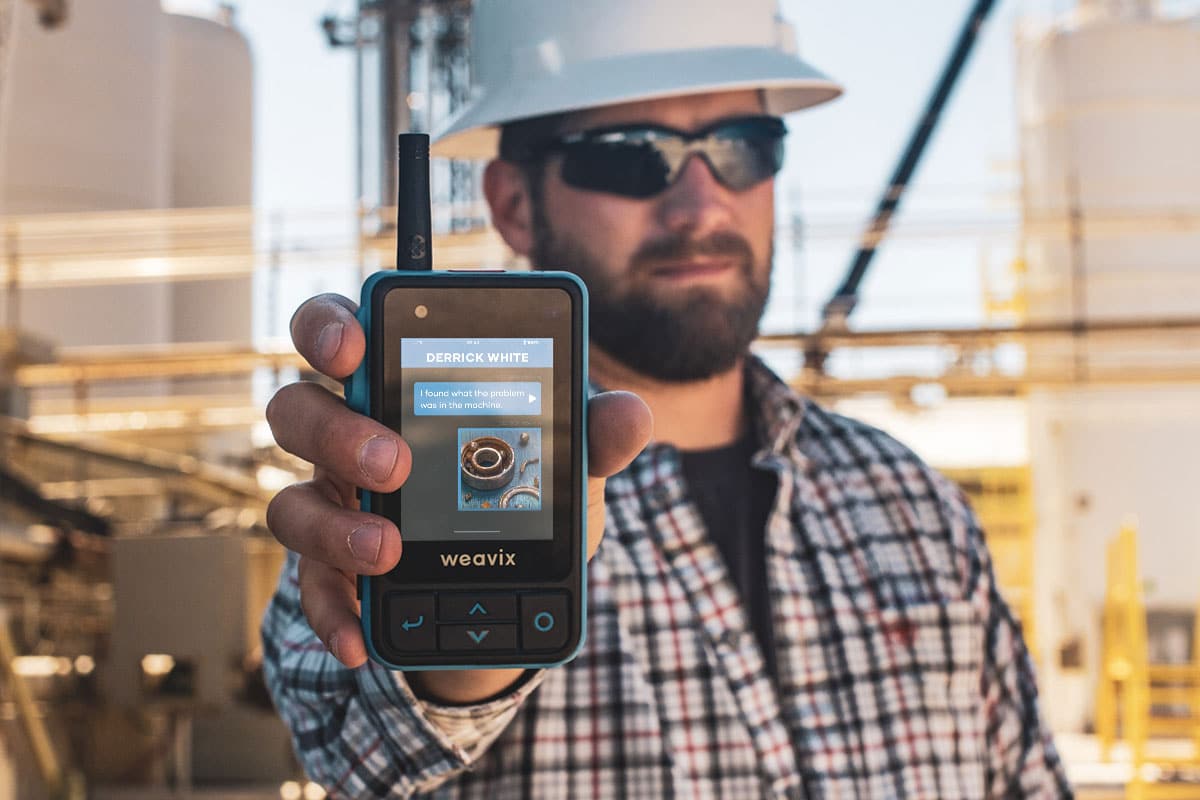
Push to Talk Walkie Talkie: What It Is and Why It Matters
Blog
Push to Talk Walkie Talkie: What It Is and Why It Matters
Learn MoreFrontline teams depend on clear, instant communication, but most push-to-talk radios create familiar frustrations — complex devices, spotty coverage, and poor integration with digital workflows. As production demands climb and…
Page 5
Page 5
Blog
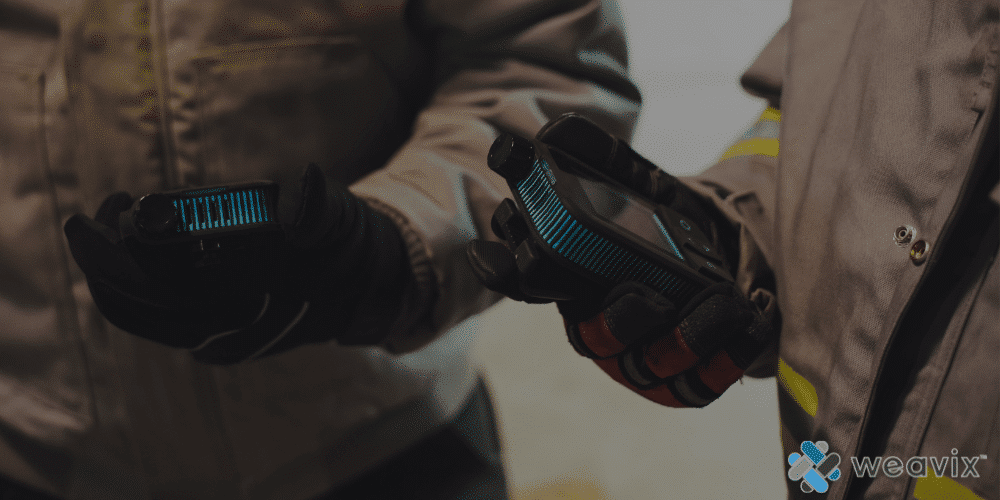
Can I Remove the Battery from my Walt Smart Radio?
No, you can’t remove the battery from your walt™ smart radio. Every walt™ smart radio has a Class 1 Div. 2 safety rating. They’re purpose-built, meaning they can survive and,…
Blog
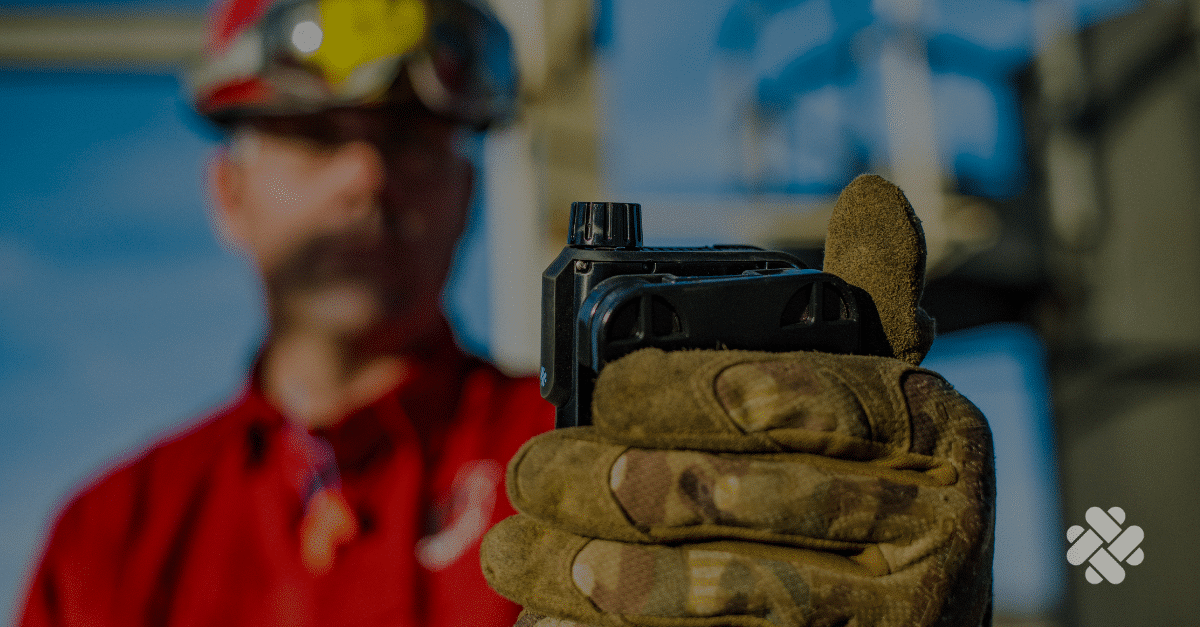
How does weavix’s Walt Smart Radio Improve Legacy PTT Communications?
Push-to-talk (PTT) is instant voice communication between one or many users on a shared channel at the push of a button. Typically, this is accomplished through a radio system or…

Blog
Industrial Digital Transformation 101: How Smart Radios Optimize Your Frontline
Industrial digital transformation looks and sounds different depending on who you ask. But, since you’ll get a different explanation of what digital transformation is with every person you ask, how…
Blog
weavix Cost Comparison: Is it Better Than Motorola™ Legacy Radio Systems?
Industrial Radios are Evolving But Can the Big-Names Keep Up? Are Motorola™ two-way radios still the best on the market? We don’t think so. Motorola™ two-way radios have led industrial…

Blog
What Is RoIP (Radio over IP)?
What does RoIP Stand For? The Interoperability Between Legacy & Modern Radios The term “RoIP” stands for Radio over Internet Protocol. Traditional, legacy radio systems use RoIP to put their…

Blog
The Internet of Things Runs Because of Workers
The Internet of Things (IoT) Only Runs With Humans For decades, industry has focused on connecting their machinery with sensors and automating processes, in turn finding ways to replace their…