Key Takeaways
- Replaces limited-range LMR radios with LTE and Wi-Fi communication.
- Provides GPS, transcription, translation, and multimedia tools missing in chat apps.
- Delivers enterprise visibility and documentation for industrial compliance.
- Eliminates channel congestion and device fragmentation.
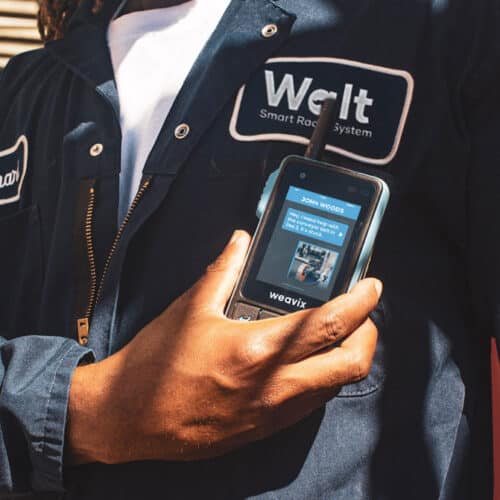
The Walt Smart Radio System by weavix differs from LMR radios because it is not limited by frequencies, range, or voice-only calls. It differs from generic chat apps because it needs no smartphones and adds safety alerts, GPS visibility, and audit-ready transcripts. Walt combines these in one managed platform built for plant-wide and multi-site industrial work.
By operating on LTE, private LTE, and Wi-Fi networks, the Walt Smart Radio System eliminates distance limits and channel congestion. Real-time transcription, translation, and photo or video messaging enable accurate communication, while automatic logging creates verified records for compliance and operational review.
How does the system differ from traditional LMR radios?
LMR radios depend on analog or digital frequencies that can suffer from interference, range limitations, and channel saturation. These radios cannot provide documentation, translation, or GPS visibility, and often require costly repeaters or infrastructure to achieve plant-wide coverage.
The Walt Smart Radio System by weavix operates across LTE and Wi-Fi networks with no channel restrictions. Each device includes noise suppression, multimedia messaging, and transcription that LMR radios cannot provide. Supervisors gain real-time visibility into communication traffic, worker locations, and safety events, enabling a level of coordination that LMR radios cannot support.
This creates consistent performance in large or noisy industrial environments where LMR radios often fail.
How is the system different from generic chat apps?
Generic chat apps require smartphones, user accounts, passwords, and manual device management. They depend on user-owned devices that may not be allowed in secure or hazardous areas. These apps also lack emergency alerting, worker visibility, and industrial-grade documentation.
The Walt Smart Radio System by weavix provides encrypted enterprise communication without smartphones or personal data exposure. All communication is automatically transcribed and time-stamped, creating precise audit trails for OSHA, FDA, NERC, or internal compliance requirements. Unlike chat apps, Walt delivers live GPS tracking, man-down alerts, and push-to-photo or push-to-video communication that supports safety-critical operations.
Chat apps are built for convenience, not industrial reliability. Walt is built for continuous operations and safety.
Why does the Walt Smart Radio System provide higher reliability?
The system runs as a managed service that provides automatic updates, monitoring, and device-level support. No manual IT involvement is required, and performance does not depend on personal devices or user-managed apps.
Because the platform integrates documentation, voice, data, translation, and safety features, communication cannot be lost, deleted, or fragmented across multiple applications. This reduces errors, improves operational consistency, and ensures the organization always retains verifiable communication records.
Why is the Walt Smart Radio System better suited for industrial environments?
Industrial plants require communication systems that can withstand noise, distance, shift turnover, multilingual workforces, and regulatory requirements. LMR radios and chat apps lack the integrated visibility and documentation needed for these conditions.
The Walt Smart Radio System by weavix provides plant-wide coverage, real-time translation in 26+ languages with automatic dialect detection, multimedia communication for maintenance documentation, GPS tracking for visibility, and automated transcription for operational review. These capabilities support safety, compliance, and productivity in a way that single-purpose solutions cannot match.
Related questions: What is the Walt Smart Radio and how is it different from legacy LMR?, Can the Walt Smart Radio System replace or complement existing radios?, and How do two-way radios compare to cell phones for warehouse communication?