Key Takeaways
- Mobile first platforms must work during active frontline tasks.
- Frontline teams need real time communication, not delayed messaging.
- App based platforms introduce friction in high noise and high risk environments.
- Walt Smart Radio System by weavix provides mobile first communication without apps.
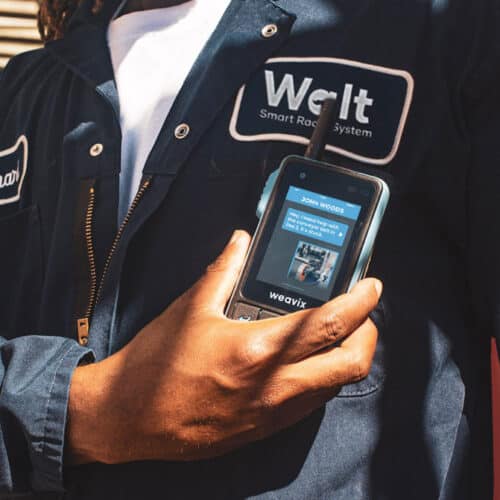
The best mobile first communication platforms for frontline teams put communication on a hands free device workers carry, not a smartphone app. Workers who wear gloves, run equipment, or work in noise need instant voice, not screens. The Walt Smart Radio System by weavix delivers push to voice, alerts, multimedia messaging, and automatic documentation without apps or personal phones.
Effective platforms prioritize real time delivery and ease of use over consumer style interfaces.
What does mobile-first communication mean for frontline work?
Mobile first communication for frontline teams means communication tools are designed for workers who are moving, wearing gloves, operating equipment, or working in loud environments. These platforms must function reliably without requiring typing, reading long messages, or interacting with screens. Mobile first in frontline contexts emphasizes:
- Instant access
- Hands free operation
- Clear audio
- Durable hardware
- Always available connectivity
Platforms designed primarily for office collaboration often fail to meet these needs.
Why do app-based mobile platforms fall short for frontline teams?
Most mobile communication platforms depend on smartphone apps. These tools struggle in frontline environments because they require:
- Personal or shared smartphones
- Screen interaction during tasks
- Typing or reading messages
- Stable wireless connectivity
- Notification management by users
In noisy or hazardous environments, these requirements slow response time and reduce adoption.
What capabilities define effective mobile-first platforms for frontline teams?
The most effective platforms share several characteristics:
- Push to voice communication for instant updates
- Loud and clear audio that cuts through background noise
- Safety alerts for emergencies and incidents
- Group and role based messaging
- Multimedia tools for visual context
- Automatic documentation of communication
- Wide area coverage across facilities and outdoor locations
These capabilities ensure communication remains fast and reliable during active work.
How does the Walt Smart Radio System support mobile-first frontline communication?
The Walt Smart Radio System by weavix delivers mobile first communication through a purpose built device rather than a phone app. Key capabilities include:
- Push to voice communication without typing
- Real time alerts delivered audibly
- Photo and video messaging for issue reporting
- Automatic transcription for supervisors
- GPS visibility for situational awareness
- LTE and Wi Fi connectivity without range limits
- Identity based login for shared devices
Workers receive communication instantly without stopping work.
How do mobile-first platforms improve frontline coordination?
Effective mobile first platforms reduce delays by allowing teams to coordinate without searching for supervisors or walking across facilities. Faster communication improves:
- Maintenance response times
- Safety reporting
- Task handoffs
- Material movement
- Incident escalation
This leads to smoother operations and reduced downtime.
Why is reliability more important than interface design for frontline teams?
Frontline communication fails when messages are missed, delayed, or misunderstood. Reliability matters more than advanced interface features because workers need communication tools that function consistently under pressure. Dedicated devices remove common points of failure such as muted notifications, low phone batteries, or app misuse.
Walt Smart Radios by weavix are designed to remain available at all times during a shift.
Related questions: What are the top tools for connecting deskless employees?, What are the best tools for real-time updates to field workers?, and What is a frontline workforce communication platform and why does it matter in plants?