



Key Takeaways
- Push to talk devices evolved from basic walkie-talkies to advanced communication platforms.
- Modern PTT includes features like multimedia sharing, real-time translation, and automatic message transcription.
- Smart radios enhance traditional PTT by integrating with enterprise systems and generating operational intelligence.
- The core functionality of instant voice communication remains unchanged in all PTT technologies.
Push-to-talk technology has powered industrial communication since the 1930s. That instant voice connection (press a button, speak, release) remains the fastest way for frontline teams to coordinate. But PTT technology itself has evolved dramatically.
Plant managers running modern operations don’t need to abandon push-to-talk. They need to understand how PTT has advanced beyond basic walkie-talkies into intelligent communication platforms that still deliver that instant connection while adding capabilities that legacy devices never imagined.
Traditional Push-to-Talk: The Foundation
PTT Apps: Software-Based Push-to-Talk
The smartphone era brought PTT to consumer devices. Push-to-Talk apps like Zello and Microsoft Teams Walkie Talkie use cellular data to deliver push-to-talk functionality through software.
The limitation? Smartphones break easily in industrial environments, distract workers with personal apps, don’t work well with gloves, and rarely last a full shift with heavy PTT use.
Analog and Digital Two-Way Radios: First-Generation PTT
Analog radios dominated industrial PTT from the 1970s through the 1990s. Digital radios improved audio quality in the 2000s. Both delivered the core value: instant voice communication with proven reliability.
But they’re limited to voice-only communication, require expensive infrastructure (repeaters, towers) for extended coverage, need FCC licensing, and provide zero operational data.
Push-to-Talk Over Cellular: Second-Generation PTT
PoC radios represented the next evolution, maintaining the PTT interface while using cellular networks for extended coverage. This generation added GPS tracking and basic device management to core push-to-talk functionality.
However, they still focus primarily on voice communication without AI-powered features, provide limited multimedia capabilities, and lack deep integration with enterprise systems.
Smart Radios: Next-Generation Push-to-Talk
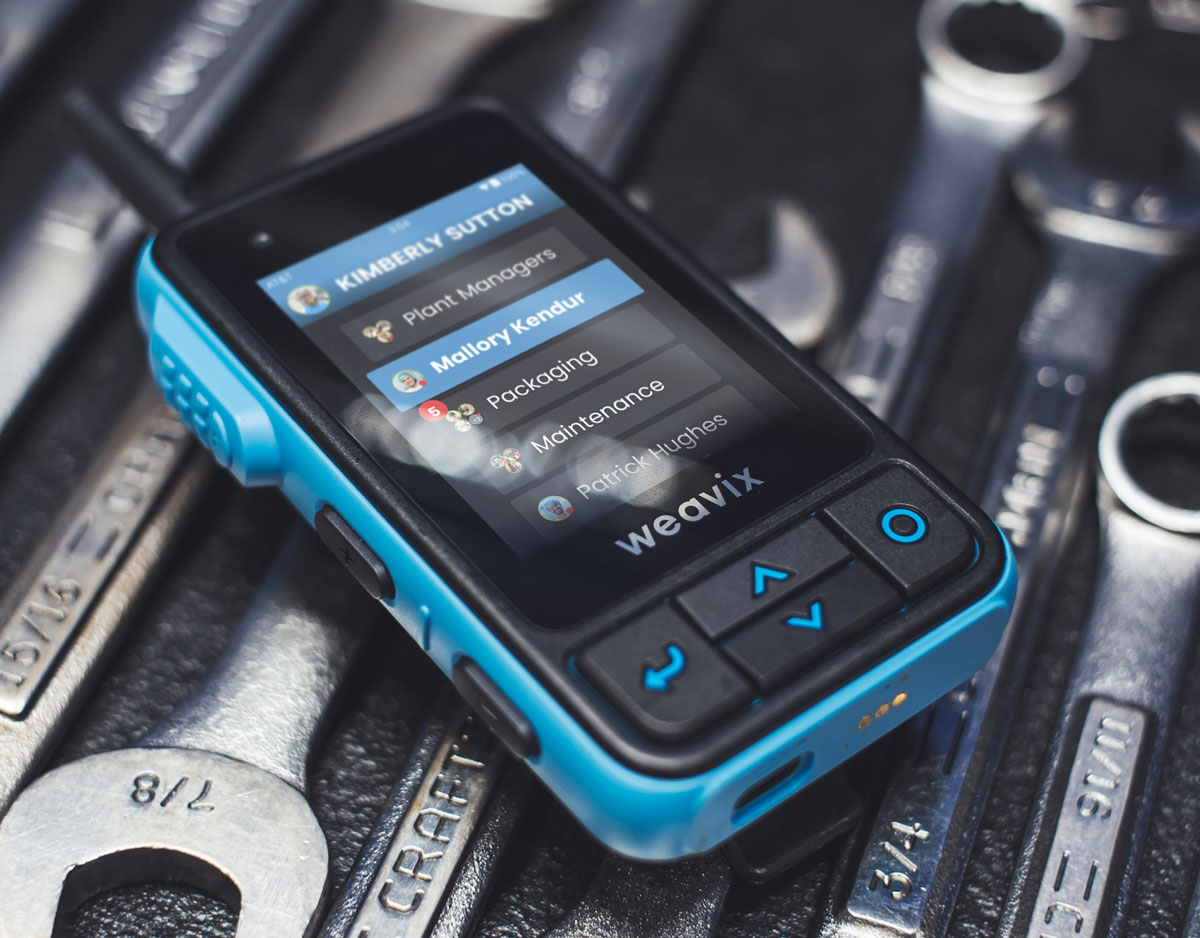
PTT technology reached its next inflection point when manufacturers asked: “What if push-to-talk devices could do more than just voice?”
Smart radios preserve the instant communication that makes PTT essential (that same press-and-speak interface workers know) while adding capabilities that transform communication into operational intelligence.
Systems like the Walt Smart Radio by weavix represent this generation of push-to-talk devices. Workers still push to talk, but now they can also:
- Push to send multimedia: Photos and videos transmit through the same PTT interface. Maintenance sees machine problems before they arrive.
- Communicate across languages: AI translation happens in real-time. Real-time translation devices like Walt eliminate language barriers on multilingual teams while maintaining the familiar PTT interface.
- Create automatic records: Every push-to-talk message gets transcribed for accountability and documentation.
- Generate operational intelligence: Data on communication patterns, response times, and incidents reveal bottlenecks and safety risks.
- Integrate with enterprise systems: PTT devices connect with safety platforms and production systems.
The Core of PTT Remains
What hasn’t changed? The fundamental value: instant voice communication at the press of a button. Press, speak, release, just like always.
The evolution isn’t about replacing that functionality. It’s about building on it. Next-generation PTT delivers everything that made walkie-talkies essential, plus the multimedia, intelligence, and integration that modern manufacturing demands, while maintaining the instant communication that made you adopt push-to-talk in the first place.