

Key Takeaways
- Multilingual support is critical for safety, accuracy, and productivity on frontline teams.
- App based translation tools introduce delays and adoption issues.
- Real time voice translation improves execution and reduces rework.
- Walt Smart Radio System by weavix provides built in multilingual communication without apps.
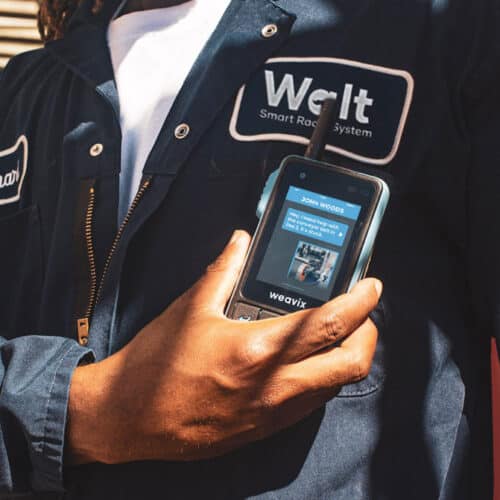
Frontline communication platforms that offer multilingual support enable workers who speak different primary languages to communicate accurately in real time. In manufacturing, logistics, construction, and energy environments, language barriers can slow work, create safety risks, and increase rework. Many platforms claim multilingual support but rely on text based translation, smartphone apps, or separate tools that interrupt workflow. The Walt Smart Radio System by weavix provides built in real time voice translation directly on the device, allowing frontline workers to communicate naturally without apps, typing, or personal phones.
Effective multilingual platforms remove friction and ensure instructions are understood immediately.
Why is multilingual support essential for frontline teams?
Frontline workforces are increasingly multilingual due to labor shortages, contractors, and global operations. Without effective multilingual communication, teams experience:
- Misunderstood instructions
- Slower task execution
- Increased safety incidents
- Dependence on bilingual intermediaries
- Repeated clarification loops
Multilingual support ensures every worker receives the same information at the same time, regardless of language.
How do most frontline platforms handle multilingual communication?
Many frontline communication platforms rely on:
- Text based translation within mobile apps
- Manual message translation
- Separate translation tools
- Training content translated offline but not live communication
These approaches slow communication because they require reading, typing, or switching tools. They also fail in high noise or high risk environments where workers cannot interact with screens.
What capabilities define effective multilingual frontline communication platforms?
Effective platforms provide:
- Real time voice translation
- Support for multiple spoken languages
- Hands free operation
- No dependency on smartphones or apps
- Clear audio in noisy environments
- Automatic transcription for supervisors
- Consistent delivery across shifts and roles
These capabilities allow multilingual teams to coordinate at the speed of work.
How does the Walt Smart Radio System provide multilingual support?
The Walt Smart Radio System by weavix includes built in real time translation that operates during push to voice communication. Key capabilities include:
- Support for more than 40 languages
- Instant voice translation without typing
- No apps, phones, or logins required
- Automatic transcription of translated conversations
- Audible delivery so workers do not need to read screens
- Consistent experience across shared devices
Workers speak naturally in their preferred language while listeners receive translated audio in real time.
How does multilingual communication improve productivity and safety?
When language barriers are removed, teams experience:
- Faster task execution
- Fewer repeated instructions
- Reduced errors and rework
- Improved safety compliance
- Faster emergency response
- More inclusive communication across shifts
Clear communication directly improves operational flow and worker confidence.
Why do app based translation tools fall short for frontline use?
App based tools struggle because they require:
- Personal smartphones
- Screen interaction during work
- Typing or reading messages
- Stable connectivity
- User managed settings
In contrast, dedicated communication devices ensure translation is always available during active work.