




Key Takeaways
- In 2025, manufacturing faced a workforce crisis with nearly 500,000 unfilled jobs, prompting companies to invest more in automation and productivity technologies.
- AI transitioned from experimental to essential, with 80% of manufacturers planning significant investments in smart manufacturing in 2025.
- Smart communication systems gained traction, enabling better data capture from frontline workers and enhancing operational efficiency and safety.
- Reshoring initiatives increased as companies prioritized domestic production, creating urgent demands for skilled labor.
- Manufacturing trends 2025 highlighted the need for technology that amplifies human capabilities and preserves institutional knowledge as experienced workers retire.
What Were the Biggest Changes in Manufacturing in 2025?
As 2025 comes to a close, five major trends fundamentally reshaped how American manufacturers operate, communicate, and compete. From an unprecedented workforce crisis to the discovery of manufacturing’s most overlooked data source, these developments will influence industrial strategy well into 2026 and beyond.
Here’s what defined manufacturing in 2025 and what it means for the future of industrial operations.
1. Manufacturing Workforce Crisis Reached a Breaking Point
The Scale of the Problem
The manufacturing labor shortage became impossible to ignore in 2025. According to data from the Bureau of Labor Statistics, there are nearly half a million open manufacturing jobs, with more than 65% of manufacturing companies surveyed by the Manufacturing Institute and Deloitte reporting that recruiting and retaining workers was their number one business challenge.
The crisis stems from multiple factors: an aging workforce with experienced workers retiring in record numbers, younger generations choosing careers outside manufacturing, and insufficient skilled trade education programs to fill the gap.
The Math Is Sobering
Current projections show the United States will have over 2 million unfilled manufacturing jobs by 2030-2033. This isn’t just about finding workers—it’s about finding workers with the technical skills needed for modern manufacturing operations that increasingly rely on automation and digital systems.
The Manufacturing Institute noted that even with average annual earnings for manufacturing employees exceeding $102,000 including benefits, attracting talent remains a persistent challenge across all manufacturing sectors.
Impact on Operations
Manufacturers responded to workforce shortages by increasing overtime costs, delaying production schedules, and in some cases, turning down new business opportunities. The labor gap also accelerated investment in automation and worker productivity technologies as companies sought to do more with fewer people.
2. Artificial Intelligence Moved from Hype to Production Implementation
Smart Manufacturing Became Standard Investment
2025 marked the year AI moved from experimental projects to core manufacturing operations. A Deloitte survey found that 80% of manufacturing executives planned to invest 20% or more of their improvement budgets in smart manufacturing initiatives, with AI-powered systems taking center stage.
Unlike previous years where AI adoption was limited to large enterprises, 2025 saw mid-size manufacturers successfully implementing AI solutions for predictive maintenance, quality control, and production optimization.
AI as Workforce Multiplier
Rather than replacing workers, AI in manufacturing evolved to augment human capabilities. Over 40% of manufacturers increased AI and machine learning investments specifically to address workforce challenges, using intelligent systems to help smaller teams manage larger operations more effectively.
Examples include AI-powered predictive maintenance that enables fewer technicians to monitor more equipment, and intelligent routing systems that help operators prioritize tasks more efficiently.
Collaborative Robots Gained Mainstream Adoption
Collaborative robots (cobots) represented 11.6% of all industrial robots ordered in North America during 2025, with adoption exceeding 20% in industries like life sciences and food processing. These systems work alongside human workers rather than replacing them, addressing both workforce shortages and safety concerns.
3. Major Brands Adopted Smart Communication Systems at Scale
Beyond Traditional Walkie-Talkies
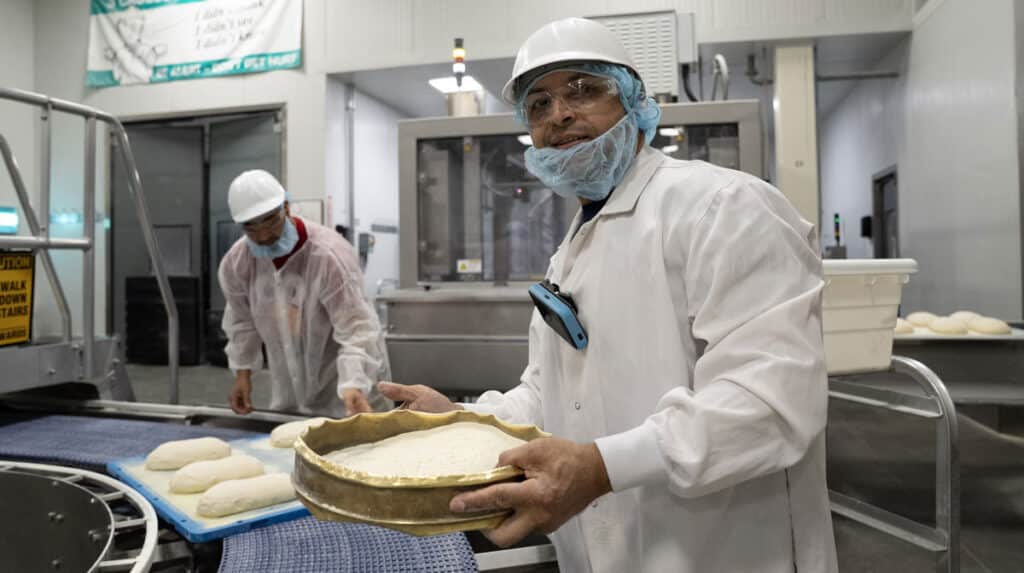
2025 became the year major manufacturers moved beyond traditional radio communication to smart systems that capture, analyze, and act on frontline worker conversations. Companies like Panasonic Energy, HanesBrands, CertainTeed, and Aspire Bakeries implemented comprehensive communication platforms that provide more than voice transmission.
These smart communication systems include real-time translation for multilingual workforces, automatic transcription and searchable message history, photo and video capture for quality documentation, and integration with existing manufacturing systems.
Proven Results at Scale
The results from major brand implementations were significant:
Panasonic Energy deployed smart radios across their 4.7 million square foot EV battery facility, enabling instant coordination that keeps multi-billion dollar operations running at peak efficiency.
HanesBrands scaled from 50-60 shared traditional radios to 250+ assigned smart radio devices across their 1+ million square foot facilities, eliminating communication silos between departments.
CertainTeed reported immediate behavior changes with their VP of IT noting that smart radios delivered accountability features that “immediately stopped” inappropriate radio chatter while improving overall productivity.
Aspire Bakeries solved language barrier challenges for their 60% Spanish-speaking workforce while expanding from 100 to 200+ devices due to worker demand for the technology.
The System-of-Record Advantage
Unlike traditional walkie-talkies that lose conversations after transmission, smart communication systems created searchable records of operational communications. This enabled manufacturers to identify recurring problems, track resolution patterns, and capture institutional knowledge that would otherwise be lost when experienced workers retire.
4. Manufacturing Reshoring Accelerated Supply Chain Resilience
Bringing Production Home
Supply chain disruptions over the previous several years drove manufacturers to prioritize resilience over pure cost optimization in 2025. Reshoring and nearshoring initiatives accelerated as companies worked to reduce dependence on distant suppliers and create more predictable supply chains.
Government incentives, including investments through the CHIPS Act and Infrastructure Investment and Jobs Act, supported domestic manufacturing growth while providing economic advantages through job creation and local investment.
Creating New Workforce Demands
The reshoring trend paradoxically intensified workforce challenges, as new domestic manufacturing facilities required additional skilled workers in a market already facing shortages. This created urgency around workforce development programs and technology solutions that could help existing workers become more productive.
Companies investing in domestic manufacturing increasingly prioritized technologies that could scale operations without proportional increases in workforce requirements.
5. Frontline Data Emerged as the Biggest Overlooked Data Set in History
The Hidden Intelligence Source
2025 revealed a fundamental insight: while manufacturers invested heavily in machine sensors and production analytics, they largely ignored the most valuable data source in their facilities—frontline worker communications.
Every day, maintenance technicians describe equipment behavior, quality inspectors identify trends, safety managers share near-miss observations, and production workers suggest improvements. This communication contains predictive insights about equipment failures, quality issues, and operational inefficiencies, but most manufacturers had no way to capture or analyze these conversations.
From Conversations to Intelligence
Leading manufacturers discovered that frontline worker communications contain early warning signals that traditional sensors miss. When maintenance technicians mention that equipment “sounds different” or quality inspectors note unusual patterns, these observations often predict problems before they appear in machine data.
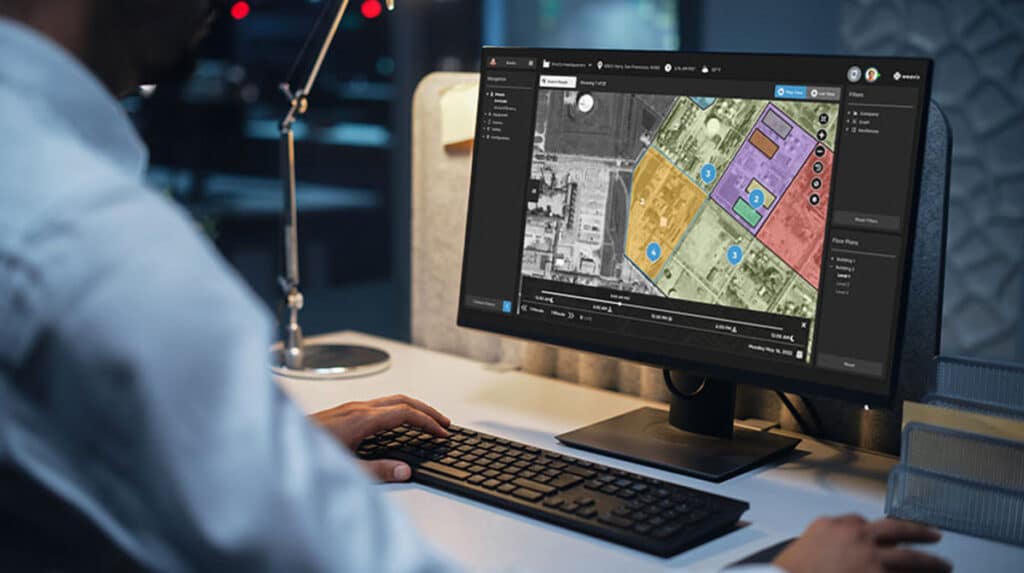
Smart communication systems enabled manufacturers to capture, transcribe, and analyze these conversations at scale. Pattern recognition across thousands of messages revealed trends invisible to traditional monitoring systems.
The Competitive Advantage
Companies that began capturing frontline data in 2025 gained significant advantages:
- Earlier identification of equipment issues before costly failures
- Real-time quality trend detection that prevents defective products from reaching customers
- Safety improvements through systematic analysis of near-miss reports
- Faster training for new employees through access to experienced worker knowledge
- Better decision-making based on real-time operational insights rather than delayed reporting
One automotive manufacturer reported over $72,000 in annual savings and 90% reduction in maintenance expenses after implementing systems that captured and analyzed frontline communication data.
Institutional Knowledge Preservation
As experienced workers retire, manufacturers realized that decades of operational knowledge was walking out the door. Smart communication systems began serving as institutional memory, capturing and preserving the expertise of veteran workers for training new employees and guiding operational decisions.
What These Trends Mean for Manufacturing’s Future
The Convergence Effect
These five trends don’t operate in isolation—they reinforce each other. Workforce shortages drive AI adoption, which increases the value of frontline data. Reshoring creates demand for more efficient operations, which highlights the importance of smart communication systems that capture worker intelligence.
Competitive Differentiation
Manufacturers who addressed multiple trends simultaneously in 2025 gained significant competitive advantages. Companies that combined smart communication systems with AI-powered analysis of frontline data could operate more efficiently with smaller workforces while maintaining higher quality and safety standards.
Technology as Workforce Multiplier
The most successful manufacturers in 2025 used technology to amplify human capabilities rather than replace workers. Smart systems enabled smaller teams to manage larger operations, made experienced workers more effective mentors for new hires, and turned every frontline worker into a valuable source of operational intelligence.
Industry Recognition and Validation
The transformation of manufacturing communication gained recognition throughout 2025. Fast Company honored weavix, the pioneer of smart radio systems for industrial frontline workers, among its Most Innovative Companies of 2025, specifically citing the company’s role in helping manufacturers capture and analyze frontline worker communications.
This recognition validated the shift from viewing communication as simple voice transmission to understanding it as a critical source of operational intelligence.
Looking Ahead to 2026
Continued Evolution
The trends established in 2025 will accelerate in 2026. Workforce challenges will intensify as more baby boomers retire, driving further investment in technologies that maximize existing worker productivity. AI capabilities will expand beyond predictive maintenance to include sophisticated analysis of worker-generated operational data.
The New Standard
Smart communication systems that capture and analyze frontline data will likely become standard infrastructure in manufacturing, similar to how email became essential for office workers. Companies still relying on traditional walkie-talkies may find themselves at significant disadvantages in operational efficiency and worker productivity.
Preparing for Change
Manufacturers planning for 2026 should consider how these converging trends affect their operations. The companies that proactively address workforce challenges, implement smart manufacturing technologies, and capture frontline intelligence will be best positioned for success in an increasingly competitive market.
Key Takeaways for Manufacturing Leaders
Address Multiple Trends Simultaneously: The most successful manufacturers in 2025 didn’t tackle these challenges in isolation. They implemented comprehensive strategies that addressed workforce productivity, AI adoption, and communication intelligence together.
Invest in Worker-Centric Technology: Technologies that make existing workers more productive and effective provide better ROI than solutions focused purely on automation. Smart communication systems, AI-powered assistance, and collaborative robots all amplify human capabilities.
Capture Institutional Knowledge: With experienced workers retiring in record numbers, systems that preserve and share operational knowledge became critical business infrastructure in 2025.
Plan for Acceleration: Each of these trends will intensify in 2026. Early adopters of smart manufacturing technologies, including intelligent communication systems, gained competitive advantages that will compound over time.
About Manufacturing Technology Adoption
The transformation of manufacturing in 2025 demonstrates that successful technology adoption requires focusing on worker productivity and operational intelligence, not just automation. Companies that treated frontline workers as valuable data sources and implemented systems to capture their insights achieved measurable improvements in efficiency, safety, and quality.
As manufacturing continues evolving, the organizations that combine human expertise with intelligent systems will set the standard for operational excellence in the 21st century.
To learn how smart communication systems can help your manufacturing operation address workforce challenges and capture frontline intelligence, contact weavix at hello@weavix.com. The pioneer of smart radio technology for industrial frontline workers, weavix helps manufacturers turn communication into competitive advantage.
About weavix: weavix manufactures Walt Smart Radio systems designed specifically for industrial frontline workers in manufacturing, construction, and hazardous environments. Unlike traditional walkie-talkies, Walt Smart Radio provides AI-powered translation, comprehensive documentation, and operational intelligence capabilities that transform communication into operational advantage.