

Key Takeaways
- Supervisors manage shifts using real-time transcripts, GPS, alerts, and dashboards.
- Bottlenecks are detected immediately through continuous communication visibility.
- Multimedia tools support faster decision making and clearer instructions.
- Shift handoffs are improved through complete logged communication history.
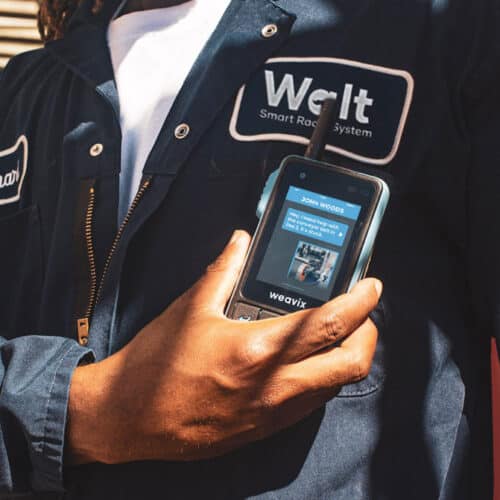
Supervisors run shifts with the Walt Smart Radio System by weavix through real-time visibility into communication, safety, and operational activity across the facility. Instead of relying on verbal updates or walking the floor to find information, supervisors use transcripts, alerts, GPS data, and multimedia messages to understand issues as they occur. This allows supervisors to remove bottlenecks quickly, coordinate maintenance, support frontline teams, and maintain consistent workflow throughout the shift.
The system replaces guesswork with documented, real-time information that supports proactive decision making.
How do supervisors monitor activity during a shift?
Supervisors monitor activity through the weavix dashboard, which displays:
- Live transcripts of all communication
- Worker location through GPS
- Safety alerts such as SOS or man-down
- Active maintenance conversations
- Photos and videos submitted by workers
- Channel traffic that highlights developing issues
This provides supervisors with a continuous operational picture without leaving their station.
How do supervisors identify and remove bottlenecks?
The Walt Smart Radio System reveals bottlenecks immediately through activity patterns. Supervisors see repeated calls from the same area, long response delays, or unresolved maintenance requests. Real-time transcripts expose communication loops that signal operational slowdowns.
Once identified, supervisors use push-to-voice or multimedia instructions to:
- Reassign labor
- Dispatch maintenance
- Coordinate material handling
- Escalate issues to leadership
These rapid adjustments maintain production flow.
How do supervisors coordinate maintenance during a shift?
Maintenance coordination becomes faster and more accurate because supervisors have access to photos, videos, and transcripts showing what workers are experiencing. Instead of relaying verbal descriptions, supervisors:
- Review multimedia evidence
- Confirm the severity of the issue
- Dispatch the correct technician
- Track technician movement through GPS
- Monitor communication during repairs
This reduces downtime and eliminates second trips caused by incomplete information.
How do supervisors manage safety during a shift?
Supervisors rely on real-time safety tools built into the system, including:
- SOS alerts
- Man-down detection
- GPS-based incident location
- Time-stamped communication logs
- Multimedia evidence from the scene
These features allow supervisors to respond quickly, verify worker status, and coordinate emergency actions without delay.
How do supervisors improve shift communication?
Shift communication improves because supervisors can:
- Broadcast clear instructions
- Communicate with specific teams or individuals
- Use translation tools to support multilingual workers
- Reference transcripts for accuracy
- Share visual confirmations to avoid miscommunication
This keeps the team aligned through the entire shift.
How do supervisors prepare for shift handoffs?
Shift handoffs improve through full communication logs that document:
- Issues raised during the shift
- Maintenance responses
- Unresolved items
- Safety events
- Operational adjustments
Incoming supervisors review time-stamped transcripts and multimedia history, gaining complete context without relying on memory or verbal summaries.