



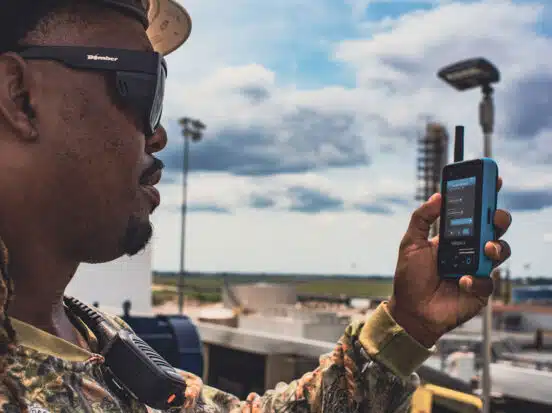
Industrial crews rely on clear communication to keep work moving, but most teams learn quickly that real-world distances rarely match what traditional radios promise. Steel structures, heavy equipment, and noisy environments degrade signals, turning “5 miles” into something much shorter. That’s why many operation leaders are reassessing their walkie-talkies, not just for distance, but also for reliability and day-to-day usability.
This guide breaks down what actually affects radio performance, how newer systems address common work challenges, and how to choose a device that fits the way your teams work.
Key Takeaways
- Industrial crews face communication challenges due to distance and environmental obstacles affecting traditional radios.
- These walkie-talkies use advanced technologies like LTE and Wi-Fi for better reliability in harsh settings.
- Key factors affecting walkie-talkie performance include signal type, power, antenna quality, and physical obstructions.
- To choose the right walkie-talkie, consider durability, range, battery life, network capability, and noise reduction features.
- Walt Smart Radio System is highlighted as the best option for reliable and modern frontline communication across various environments.
What Is a Long-Range Walkie-Talkie?
A walkie-talkie with an especially good range is a two-way radio system designed to maintain reliable communication across distances that standard consumer radios can’t reach. Instead of using basic analog signals, these special radios leverage higher-powered transmission, optimized antennas, and purpose-built frequency bands that help workers stay connected in challenging environments such as industrial facilities, construction sites, and remote outdoor areas.
See our buyer’s guide to nationwide walkie-talkies.
How Far Can Long-Range Walkie-Talkies Reach?
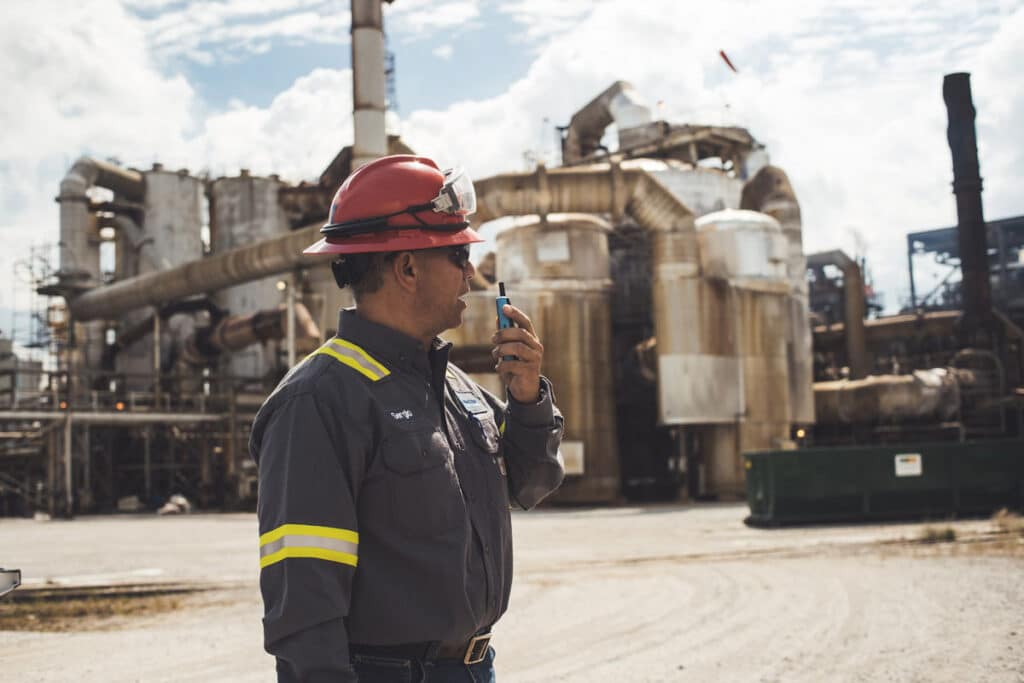
These walkie-talkies can reach anywhere from a few miles up to several dozen miles, depending on the environment, the device’s power, antenna quality, and the frequency band.
Dense metal, concrete walls, machinery, vehicles, rough terrain, weather, and electromagnetic interference all reduce walkie-talkies’ range. In industrial environments, a device claiming five miles may realistically cover one mile or less when obstacles are present.
But newer communication systems avoid range limitations altogether. Rather than relying on line-of-sight radio waves, they use LTE networks, Wi-Fi, or hybrid connections to maintain communication across facilities, between sites, and even across entire regions, improving range reliability and keeping teams connected even when traditional radios fail.
Dig deep: How far can walkie-talkies reach?
How Do Long-Range Walkie-Talkies Work? Factors That Affect Radio Distance
These walkie-talkies work through two main approaches: traditional radio frequencies or modern network-based communication.
- Analog radios transmit audio over VHF or UHF frequencies. These signals move through the air and weaken every time they hit walls, metal, machinery, or rough terrain. Their distance depends on how clean the path between devices is.
- Modern frontline communication solutions work differently, using LTE networks, Wi-Fi, or hybrid connectivity to carry voice and data. This technology removes most distance limitations, giving teams consistent communication across regions.
These are the most common factors that affect how far analog radios reach:
- Transmission power: Higher output pushes audio farther but drains batteries and can create interference with other equipment
- Antenna quality and placement: Elevated, well-tuned antennas improve audio clarity and reach
- Frequency band: VHF radios work better in open fields, while UHF radios provide stronger coverage among buildings and industrial structures
- Physical obstructions: Concrete, steel, equipment, and vehicles reduce real-world range capabilities
- Interference: Nearby radios, wireless systems, and industrial equipment disrupt signals
- Battery level: Weak batteries lower transmission strength and shorten range
- Weather conditions: Heavy rain, fog, and moisture scatter analog signals
- Antenna tuning: Poorly matched antennas reduce performance and reliability
Because analog radios depend on these signals and environmental variables, the distances printed on their packaging rarely reflect what frontline teams experience on the job. Network-based systems bypass most of these limitations, offering predictable, obstacle-resistant communication built for complex industrial environments.
The Top-Rated Walkie-Talkies with Excellent Range for the Job Site
The top-rated walkie-talkies with LTE and Wifi meet complex demands for worker safety and real-time coordination across expansive or heavily obstructed work zones. The best options include:
| Top-Rated Long-Range Walkie-Talkies | Pros | Cons | Best for |
|---|---|---|---|
| Walt® Smart Radio System by weavix® |
| Requires network availability (Wi-Fi or LTE) | Large facilities, multi-site operations, and industrial teams needing reliable, enterprise-grade communication and safety tools |
| Motorola T600 H2O Talkabout Radio |
|
| Outdoor activities, light recreational use, and basic on-site coordination |
| Midland GXT1000VP4 |
|
| Small teams in open outdoor areas or low-density environments |
| Uniden SX507-2CKHS |
|
| Outdoor use, boating, and general-purpose communication in open spaces |
| Cobra ACXT1035R FLT |
|
No enterprise features, no data, no tracking | Recreational users, short-range communication near water |
1. Walt Smart Radio System
The Walt Smart Radio System stands apart from traditional walkie-talkies by using LTE, Wi-Fi, and hybrid connectivity rather than VHF/UHF transmissions. Built for complex manufacturing operations, Walt adds collaboration tools like PT3 (push-to-talk, picture, and video), AI translation, and secure cloud logging — capabilities that analog radios simply can’t match.
Pros:
- LTE/Wi-Fi connectivity for wide-area communication
- PT3 for quick visual and voice-based collaboration
- Real-time language translation for multilingual teams
- Secure logs for traceability and compliance
- Rugged, frontline-ready construction
Cons:
- Walt requires network availability (LTE or Wi-Fi)
Best for:
- Multi-site operations, large industrial facilities, and teams needing advanced communication and safety solutions
2. Motorola T600 H2O Talkabout Radio
The Motorola T600 H2O Talkabout is designed for outdoor and recreational use, offering dependable performance in open environments and around water. This device’s waterproof construction and simple interface make it an option for casual users or small teams who need basic push-to-talk communication. However, its real-world distance decreases in dense or indoor settings where structures disrupt analog signals.
Pros:
- Waterproof and floatable
- Easy to use
- Built-in NOAA weather alerts
Cons:
- Limited performance indoors or in industrial environments
- Voice-only functionality
- No enterprise management or data features
Best for:
- Outdoor recreation, basic on-site coordination, and water-adjacent environments
3. Midland GXT1000VP4
The Midland GXT1000VP4 provides solid audio quality and a variety of channels, making it a choice for small teams working in open spaces. While this radio’s advertised range is high, actual performance depends on the environment. In areas with obstacles, the device’s analog signal may struggle to maintain long-distance clarity, and it lacks the advanced collaboration tools needed in industrial settings.
Pros:
- Clear audio
- Multiple channels and privacy codes
- Good performance in open terrain
Cons:
- Range drops quickly in built-up areas
- No multimedia or digital collaboration features
Best for:
- Outdoor teams working in open fields or low-density environments
4. Uniden SX507-2CKHS
The Uniden SX507-2CKHS is known for its long advertised distance in ideal conditions and strong waterproof rating. This walkie-talkie option performs well outdoors, particularly in unobstructed areas where its analog signal can travel freely. But like most consumer walkie-talkies, it struggles with penetration in industrial environments and lacks the management, safety, and collaboration tools needed for enterprise operations.
Pros:
- Good performance in open areas
- Waterproof design
- NOAA weather alerts included
Cons:
- Dramatic range reduction indoors or around metal structures
- No enterprise features like logging or translation
- Designed primarily for recreational or outdoor use
Best for:
- Boating, hiking, and clear-line-of-sight outdoor communication
5. Cobra ACXT1035R FLT
The Cobra ACXT1035R FLT is a compact, waterproof walkie-talkie geared toward recreational users who need simple communication near water or on outdoor trips. This long-distance two-way radio floats, handles basic weather exposure, and is easy to carry. However, its analog signal offers limited real-world distance, and it isn’t built for industrial durability or high-noise environments.
Pros:
- Waterproof and floatable
- Lightweight and easy to carry
- Straightforward controls
Cons:
- Limited real-world range
- No advanced collaboration or safety features
- Not designed for heavy-duty industrial use
Best for:
- Recreational users, outdoor activities, and short-range coordination near water
How to Choose the Right Walkie-Talkies for Long Range
Choosing the right walkie-talkies for long range starts with understanding how your team actually works day to day. With the walkie-talkie market projected to reach $11.62 billion by 2029 at a CAGR of 11.7%, businesses now have more models and technologies to choose from — but not all will hold up in industrial settings. The best option is the one that stays clear, durable, and reliable in the real environments where your crews operate.
Key features and capabilities to look for in a walkie-talkie:
- Network or frequency performance: Devices should maintain clear communication around machinery, steel, and concrete
- Long battery life: Radios must stay powered through full shifts without frequent charging
- Water-resistant construction: Durable housing helps devices survive weather, moisture, and wet environments
- Rugged durability: Strong materials protect against dust, drops, and heavy daily use
- Background noise reduction: Audio processing should keep messages clear in loud job sites
- Glove-friendly controls: Buttons and interfaces should be easy to operate without removing PPE
- Wide-area communication capability: Systems should support large facilities or multi-site operations without relying on line-of-sight
- Safety and alerting tools: Built-in alert systems, logging, and location visibility help strengthen worker safety and accountability
Keep learning: Walt vs Smartphones vs Two-Way Radios: What Is the Smarter Way to Communicate on the Frontline?
Meet Walt: The Best Long-Distance Walkie-Talkie for Frontline Communications
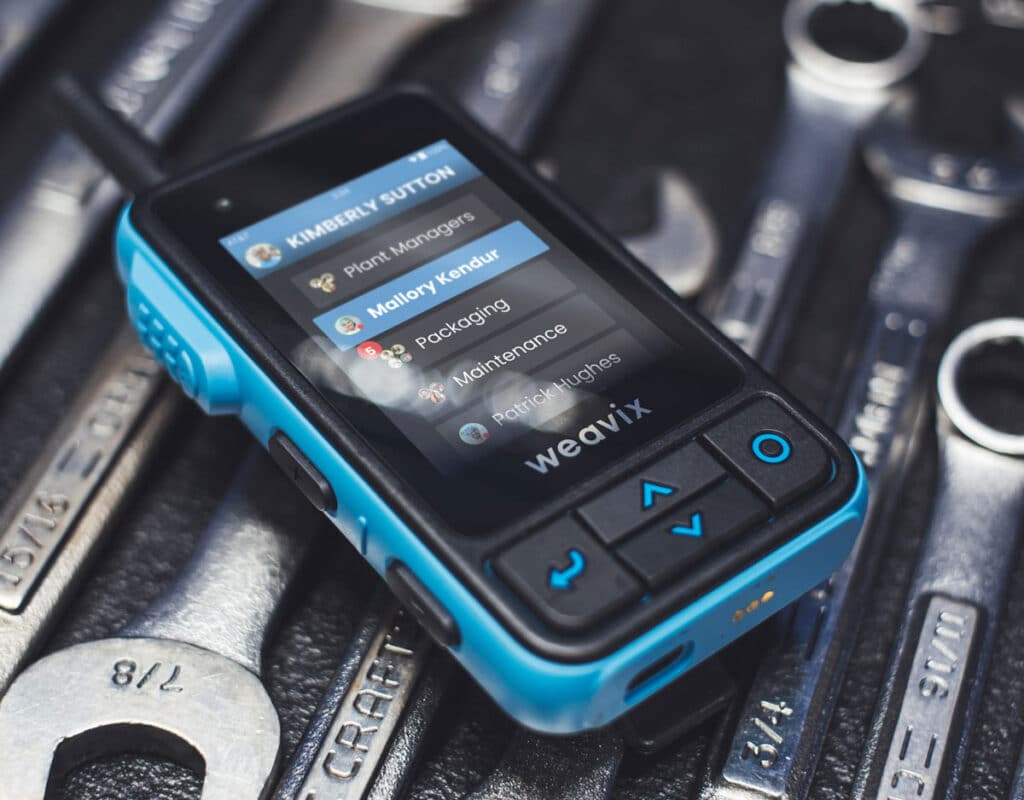
The Walt Smart Radio System delivers clear frontline communications across large facilities, remote job sites, and multi-site operations without the limits of traditional radios. Our platform brings clear audio, visual messaging, translation, and safety tools into one device, giving teams a faster way to coordinate than cell phones or analog walkie-talkies.
Built as a waterproof, rugged radio, Walt holds up in harsh environments while capturing every message in a secure, searchable system. This blend of durability, clarity, and modern collaboration features is why Walt is the best long-distance walkie-talkie for crews that need consistent communication wherever work happens.
If you’re ready to strengthen safety, reduce downtime, and keep every worker connected, Walt is built to support your entire operation. Contact us to learn more.