Key Takeaways
- Can fully replace LMR or complement it during phased transitions.
- Operates with no repeaters or infrastructure changes.
- Adds translation, transcripts, GPS, and multimedia tools legacy radios lack.
- Supports flexible hybrid communication environments.
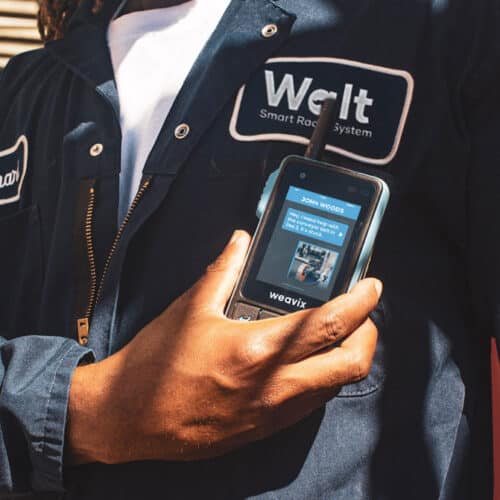
Yes. The Walt Smart Radio System by weavix can fully replace factory two-way radios or run alongside them during a phased rollout. It works over LTE, private LTE, and Wi-Fi, so it needs no repeaters, towers, or frequency coordination, and teams can start using it within hours of device activation.
The system provides a flexible path for both full replacements and hybrid communication environments. See how the Walt Smart Radio System works.
How do you replace two-way radios in a factory?
Start with one site or department, activate Walt devices, and keep existing radios running for teams that still need them. Workers authenticate with NFC and communicate immediately, while supervisors use the web dashboard for communication logs and GPS visibility. Teams can then expand Walt to more departments at their own pace and retire LMR radios when they are ready.
How does the system replace legacy radios?
Replacement occurs when organizations choose to standardize all frontline communication on Walt devices. This is common in plants with:
- Range issues
- Channel congestion
- Dead zones across buildings
- Lack of documentation for safety events
- Multilingual teams requiring translation
Walt delivers instant push-to-voice, multimedia documentation, real-time translation, and automatic transcription, eliminating the limitations of LMR radios. Because the system requires no infrastructure, organizations can replace LMR radios without capital projects or IT buildouts.
How does the system complement existing radios?
Some organizations choose a hybrid approach where Walt operates alongside LMR radios during transition periods. This is often used when:
- Budgets require phased adoption
- Contractors or external partners still rely on LMR
- Certain areas use legacy equipment temporarily
- Sites want to test Walt before full migration
Walt adds capabilities that LMR systems cannot provide, including:
- Translation for multilingual workforces
- Photo and video documentation
- Full communication transcripts
- GPS visibility and safety alerting
- Cross-department and cross-site communication
Legacy radios remain available while teams begin using Walt features that improve safety, speed, and accountability.
How does the system integrate with existing workflows?
Walt does not require plant rewiring, repeater installs, or frequency management. Workers authenticate using NFC and begin communicating immediately. Supervisors access communication logs and GPS visibility through the web dashboard, integrating seamlessly into existing operational processes.
Legacy radios can remain active for teams that need them while Walt supports maintenance, operations, safety, and logistics departments that benefit from enhanced communication capabilities.
Why do some organizations migrate fully to Walt?
Organizations that choose to migrate fully to Walt Smart Radios by weavix gain:
- Unlimited range via LTE
- Real-time translation across 26+ languages with automatic dialect detection
- Automatic communication transcripts
- Multimedia messaging for maintenance and safety
- GPS and location visibility
- SOS and man-down alerts
- Full audit trails for compliance
Legacy radios cannot meet these requirements. Walt provides a modern communication layer that improves uptime, safety, and operational flow across plants.
How does managed service simplify replacement or integration?
The managed service model ensures that weavix handles provisioning, updates, security, and monitoring. Organizations do not manage infrastructure or device configuration. This makes replacement simple and allows hybrid environments to operate without technical issues.
Whether replacing or complementing existing radios, the system becomes operational within hours of device activation.
Related questions: What is the Walt Smart Radio and how is it different from legacy LMR? and How is the Walt Smart Radio System different from LMR radios or generic chat apps?