

 Aaron Cohen
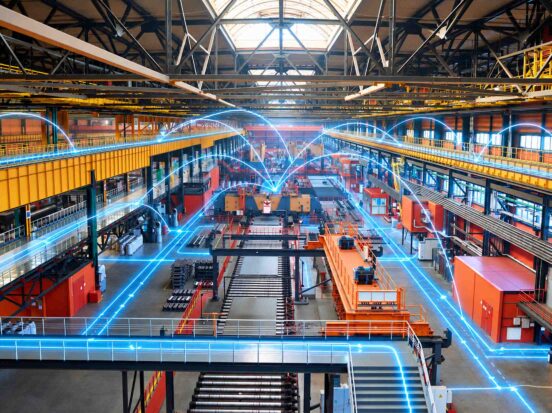
TLDR: Indoor location tracking shows where workers are inside plants, warehouses and large buildings, where GPS is weak or does not work. A tag, badge or radio on the worker talks to fixed points in the building, such as Wi-Fi access points or Bluetooth beacons. Tied to SOS and man-down alerts, it tells responders where to go before anyone starts searching.
Why doesn’t GPS work indoors?
GPS needs a clear view of the sky, and steel roofs, concrete floors, and thick walls block or bounce the signal, so a phone or radio that shows a precise outdoor position can be off by a whole building indoors. Indoor tracking fills that gap with other signals. Outdoor GPS still matters for yards, docks, and job sites, which is why many teams use both. Our guide to using walkie talkies with GPS covers the outdoor side.
How does indoor location tracking work?
Most systems put a tag, badge, or device on the worker and use fixed points in the building to work out where it is. These are the common methods:
| Method | How it finds the worker | What you install | Good to know |
|---|---|---|---|
| Wi-Fi positioning | Signal strength from the access points already in the building | Usually nothing new where Wi-Fi already covers the site | Location follows Wi-Fi coverage |
| Bluetooth Low Energy (BLE) beacons | Small battery-powered beacons heard by the worker’s device | Beacons around the site, and their batteries | Detail depends on how many beacons you install |
| Ultra-wideband (UWB) | Precise timing between tags and fixed anchors | Anchors and tags | The most hardware to install and maintain |
| RFID and checkpoints | A reader logs a tag passing a known point, such as a door or gate | Readers at doors and gates | Shows where someone was last seen, not where they are now |
A real-time location system (RTLS) combines one or more of these methods to give supervisors a live map. Accuracy depends on the method, the building, and how much hardware you install, so ask each vendor to show it working in your own facility before you choose.
Where does indoor tracking pay off?
Indoor tracking pays off wherever someone needs to find a worker fast: emergencies, lone work, evacuations, and dispatch.
- Emergency response. When a worker presses an SOS button or a man-down alert fires, responders get a location with the alert instead of searching. See our guides to duress alarms and man-down systems.
- Lone worker safety. Supervisors can see where isolated workers are and who is closest to help.
- Evacuations and muster points. A live view of who is still inside a building shortens headcounts and shows who has not reached the assembly point.
- Dispatching the nearest person. Send the closest maintenance tech or forklift driver instead of the next name on the list.
- Restricted and hazardous zones. Alert when someone enters an area they should not, or when too many people are in one area.
What does a fast response look like?
It looks like the right people knowing in time. At a textile plant, a forklift ran over a worker’s foot, and there was a lot of blood. The floor supervisor pressed SOS on his radio. People responded immediately, and she was at the hospital in under 30 minutes.
The supervisor knew right away. One button made sure the people who could help knew too. When the team reviewed the footage later, the response was so fast it almost looked unreal.
What should you ask before you choose a system?
Start with what you need location for, then check precision, devices, alerts, install effort, and data rules.
- How precise does it need to be? Knowing the area is often enough to send the nearest person. Finding a worker who cannot answer may need more detail.
- Does the worker carry another device? A tracker that is separate from the radio is one more thing to forget, charge, and lose.
- Is location tied to alerts and communication? A map is only useful if the person watching it can talk to the worker right away.
- How much infrastructure is needed? Beacons and anchors mean install time, cabling, and upkeep.
- What happens to the data? Decide who can see location, when, and how long it is kept, and tell workers up front.
Why build location into the radio?
Because the device workers already carry is the one they will not leave behind. The Walt® Smart Radio System puts voice, SOS and man-down alerts, and real-time location indoors and outdoors on one radio, so an alert reaches responders with a position and they can talk to the worker on the same device.
Indoor location tracking FAQ
Can GPS track workers indoors? Not reliably. GPS needs a clear view of the sky, and roofs, floors, and walls block or bounce the signal inside buildings. Indoor tracking fills the gap with signals from inside the building, such as Wi-Fi access points, Bluetooth beacons, ultra-wideband anchors, or RFID checkpoints. Many sites use GPS outdoors and indoor tracking inside.
How accurate is indoor location tracking? It depends on the method, the building, and how much hardware is installed. Wi-Fi uses the access points you already have, Bluetooth beacons and ultra-wideband anchors add hardware, and RFID only shows where someone was last seen. Steel and concrete change results, so ask each vendor to show accuracy in your own facility.
What is an RTLS? A real-time location system, or RTLS, combines tags or devices on people and equipment with fixed points in a building to show their positions on a live map. Supervisors use it to find a worker in an emergency, send the nearest person to a job, and see who is still inside during an evacuation.
Do workers need to carry a separate tracker? Not always. Some systems use badges or tags, which are one more device to charge, carry, and remember. Others build location into the radio or phone workers already use, so an SOS or man-down alert arrives with a position and the responder can talk to the worker on the same device right away.
Is it legal to track workers’ location at work? Rules vary by state and country, and often depend on whether tracking is limited to work hours and work devices. Talk to HR and legal counsel before you roll it out. Then tell workers what is tracked, who can see it, how long it is kept, and how it keeps them safer.
Start here
If finding people fast is a gap on your site, request a demo and see how voice, SOS alerts, and location work together on one radio.
