

Featured Resources

Post
PrimeFlight Aviation Services Reduces Refueling Delays and Strengthens Safety Response with weavix Walt Smart Radio System Deployment
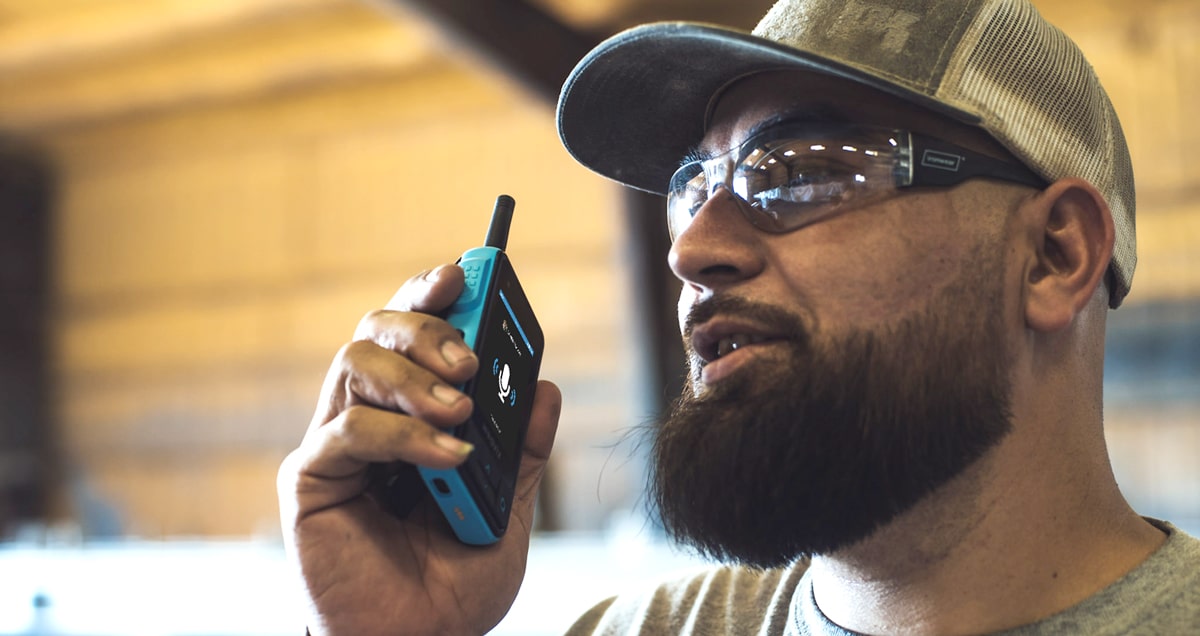
Leading U.S. aircraft services provider achieves 5–10-minute time savings per operation across multiple airport locations while improving accountability and emergency response capabilities A PrimeFlight Aviation employee holds up a Walt…
Blog
10 Reasons to Give Every Worker an Industrial Radio
Most industrial radios suffer from a fatal flaw: they don’t come with the needed functionality or support to justify giving every worker a device. That means workers don’t have a…

Blog
How Far Can Walkie Talkies Reach? Real-World Range by Job Site
Real walkie talkie range on a job site is usually far below the “30-mile” claims on the box, because steel, concrete, terrain, transmission power, antenna quality and battery level all…
-
PrimeFlight Aviation Services Reduces Refueling Delays and Strengthens Safety Response with weavix Walt Smart Radio System Deployment

Post
PrimeFlight Aviation Services Reduces Refueling Delays and Strengthens Safety Response with weavix Walt Smart Radio System Deployment
Learn MoreLeading U.S. aircraft services provider achieves 5–10-minute time savings per operation across multiple airport locations while improving accountability and emergency response capabilities A PrimeFlight Aviation employee holds up a Walt…
-
10 Reasons to Give Every Worker an Industrial Radio

Blog
10 Reasons to Give Every Worker an Industrial Radio
Learn MoreMost industrial radios suffer from a fatal flaw: they don’t come with the needed functionality or support to justify giving every worker a device. That means workers don’t have a…
-
How Far Can Walkie Talkies Reach? Real-World Range by Job Site

Blog
How Far Can Walkie Talkies Reach? Real-World Range by Job Site
Learn MoreReal walkie talkie range on a job site is usually far below the “30-mile” claims on the box, because steel, concrete, terrain, transmission power, antenna quality and battery level all…
Page 9
Page 9
Blog
10 Reasons to Give Every Worker an Industrial Radio
Most industrial radios suffer from a fatal flaw: they don’t come with the needed functionality or support to justify giving every worker a device. That means workers don’t have a…

Blog
How Technology Adoption Empowers Your Deskless Workers
More and more companies in manufacturing and beyond are exploring opportunities for digital transformation. And while AI, robots, and automation attract a lot of attention in these discussions, there’s one…

Blog
The Best Radios for the Food and Beverage Industry
The best radios for food and beverage plants reach every corner of a large facility, stay clear over line noise, and let workers share photos, translate across languages and call…

Blog
Construction Walkie Talkie Guide: Best Two-Way Radios for Construction Sites
Quick answer: The best two-way radios for construction sites combine rugged durability, long range, noise-canceling audio, and safety features such as emergency alerts and man-down. The Walt Smart Radio System…

Blog
Best Walkie Talkies for Business: 11 Top Radios Compared
Choosing the best walkie-talkies for business use can be overwhelming, especially with so many options available on the market today. To help you make an informed decision, we've outlined the…

Blog
Tap-and-Go Authentication on the Frontline: A Guide
Picture this: Your frontline workers are suited up in full personal protective equipment (PPE) and ready to tackle their tasks, but first, they need to authenticate with multiple programs. This…

Blog
Why Every Frontline Needs a Man Down Radio System
A man-down system is a worker safety feature on a radio or wearable that alerts supervisors and the safety team, with the worker's identity and GPS location, when a worker…

Blog
What Is DMR? Digital Mobile Radio Meaning, Range, and Alternatives
DMR stands for Digital Mobile Radio, a digital two-way radio standard from ETSI that splits each 12.5 kHz channel into two time slots. DMR radio range is typically 2 to…

Blog
Top Benefits of Workforce Danger Alert Systems
Workplace safety is non-negotiable for manufacturing, construction, hospitality, and food and beverage production because hazards are an ever-present risk. Workforce danger alert systems play a critical role in minimizing these…

Blog
Connected Worker App Buyer’s Guide: 9 Features to Compare Before You Choose
A connected worker app puts communication, safety alerts and work information on one device for frontline teams. When you compare apps, look at how workers talk (voice, text and video),…

Blog
2025 Predictions — The Future of Frontline Communication
AI is reshaping how frontline teams connect, collaborate, and operate. The convergence of ever-expanding mobile technology and advancements in connectivity is changing communication—it's transforming the fabric of frontline communications. It…

Blog
Analog vs Digital Radio: What’s the Difference and Which Is Better?
An analog radio system transmits continuous analog signals for basic voice communication, while a digital radio system converts audio into digital signals for clearer sound, longer range, and features like…
