



Key Takeaways
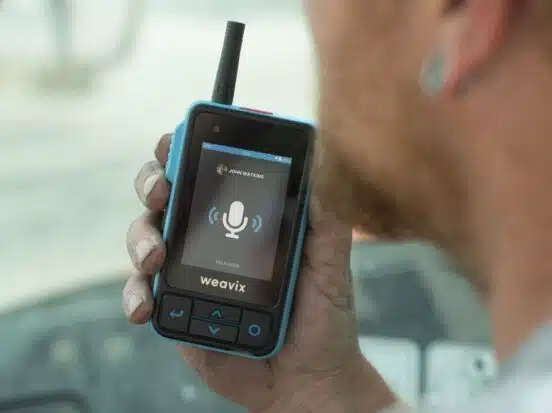
- Two-way radios facilitate real-time communication, crucial for industries like construction, hospitality, and manufacturing.
- Analog and digital two-way radios serve different needs, with digital radios offering better audio quality and added data transmission capabilities.
- Smart two-way radios combine traditional functionality with AI features, enabling multimedia messaging and real-time language translation.
- Two-way radio systems enhance safety with features like GPS tracking and emergency alerts, making them ideal for high-risk environments.
- Manufacturing two-way radios improve efficiency by streamlining communication and reducing response times across teams.
Two-way radio systems are powerful tools that let users communicate by converting audio to radio waves transmitted through the air, which are then converted back to audio by the receiving radio. Unlike traditional radios that only transmit information in one direction, two-way radios enable real-time conversation — this is essential for businesses where quick, reliable communication is key.
Two-way radio communication is widely used across construction, food and beverage, and manufacturing industries. They use these devices because they provide a hands-free communication system that keeps their workforce connected and productive, especially in rugged, loud, and often challenging environments.
What Is a Two-Way Radio System?
A two-way radio system is a versatile tool that lets users both transmit and receive radio signals, enabling real-time voice communication between individuals or groups. As a result, they make interactive conversations possible.
These systems send and receive information through radio waves. This conversion to radio waves can be sent as either an analog or digital signal, with the digital being the more modern technology. For example, a digital two-way radio system makes it possible to send other types of data over the radio waves, like text messages. It is also possible to encrypt data to stop others from using your network without your permission.
Whether coordinating a construction project, managing emergency response teams, or ensuring smooth transportation logistics, professional two-way radios provide an indispensable solution for maintaining connectivity and enhancing operational efficiency.
Keep reading: Why phones don’t work for the frontline.
Types of Business Two-Way Radio Systems
Business two-way radio systems come in a few different types, each meant for specific operational needs. Here’s a quick overview:
1. Analog Two-Way Radios
Analog two-way radio systems are the trusty old go-to. They’ve been a staple in business communication for decades because they’re simple and cost-effective, giving users clear audio for short-range communication. But analog systems lack all the advanced features like encryption or interference rejection.
2. Digital Two-Way Radios
Digital radio systems have largely replaced analog due to their enhanced capabilities, such as clearer audio quality, extended range, and greater privacy. They transmit not only audio but also additional data like text messages and encrypted information, which improves workforce management. Capabilities include:
- Enhanced audio quality: Noise-canceling technology filters background noise
- Increased battery life: Digital radios are much more energy-efficient
- Encrypted communication: Ensures secure transmission
Analog vs Digital Two-Way Radio Systems
| Feature | Analog Radios | Digital Two-Way Radio Systems |
|---|---|---|
| Audio Quality | Moderate | Clear |
| Communication Range | Limited | Extended |
| Battery Life | Standard | Longer |
| Security | Limited | Encrypted |
3. Push-to-Talk Radios
Push-to-talk (PTT) radios take communication to another level, boosting range exponentially by bringing cellular LTE networks into the mix. They allow users to press a button to communicate instantly, emphasizing their portability and versatility on the job. But the real benefit is usability anywhere a Wi-Fi or LTE signal is available.
This setup is ideal for quick, hands-free communication for teams that require greater range, like connecting workers across multiple construction sites or linking an entire frontline workforce at different manufacturing facilities across the country.
Learn why manufacturers prefer push-to-talk radios over mobile phones.
4. Smart Two-Way Radios
Here’s where things really start to get interesting. Smart two-way radios, like those offered by weavix, combine the traditional functionality of two-way and push-to-talk radios, but they add advanced AI-powered features. The weavix platform and Walt Smart Radios surpass all others to enhance communication beyond simple voice messaging. How? By incorporating tools like:
- AI language translation
- Multimedia messaging
- Safety alerts
- Location tracking
- Real-time transcription
- Hands-free or glove-friendly operation
- Noise reduction in loud environments
- Role-based channels and permissions
How Do Two-Way Radios Work?
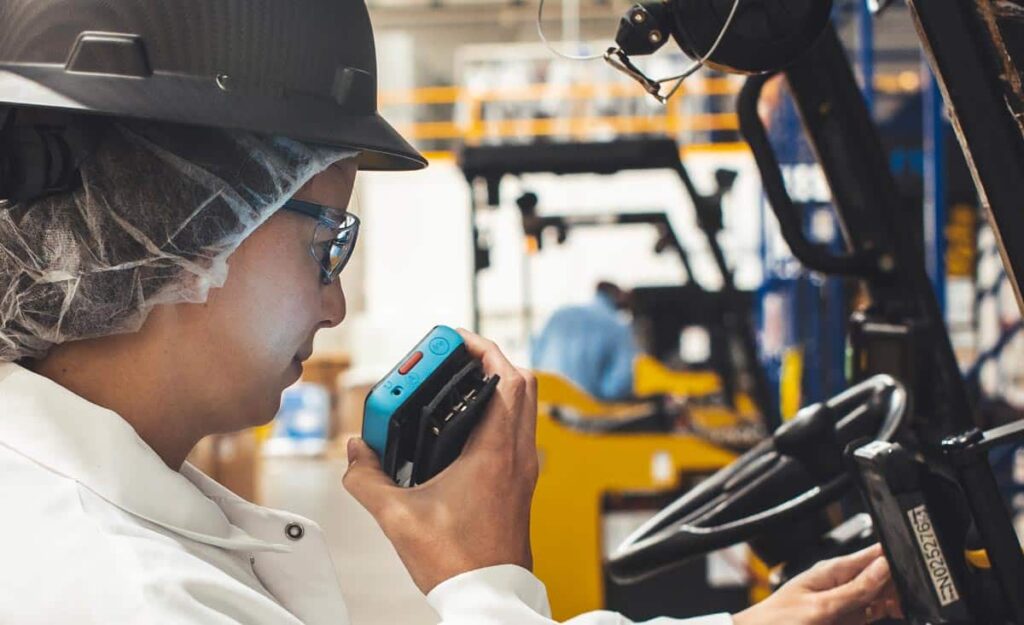
Two-way radios work by turning your voice into a radio signal and sending it to anyone on the same channel, giving teams instant, push-to-talk communication without dialing or waiting.
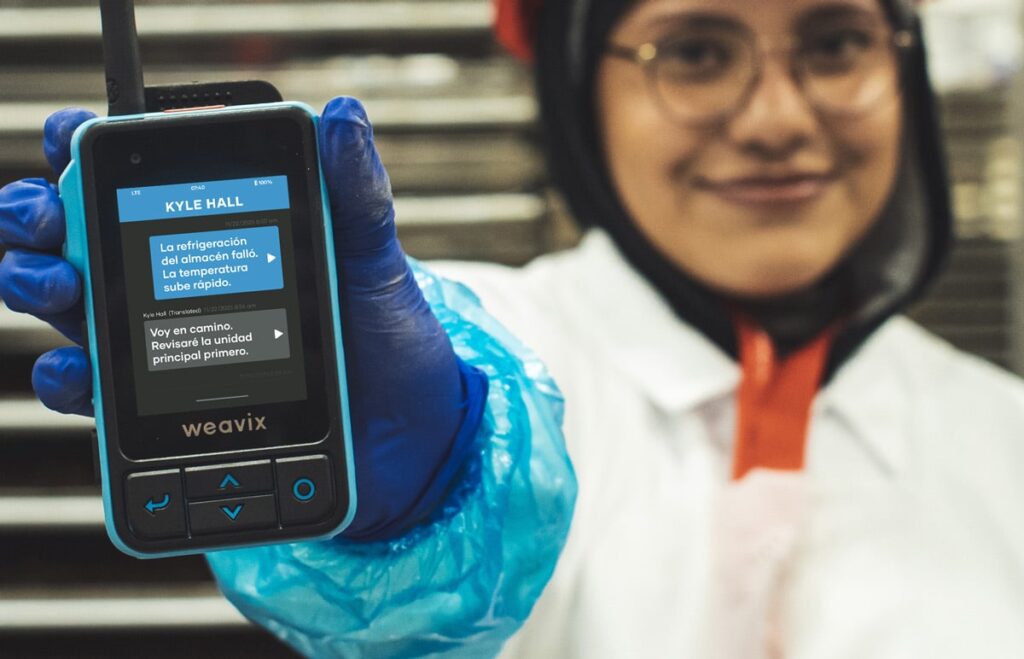
Smart two-way radios go a step further than traditional two-way devices. They operate by connecting to both public and private LTE cellular networks and Wi-Fi, giving users a hybrid communication experience that adapts to different environments and locations. Combining modern hardware with advanced data capabilities lets smart radios facilitate communication across language barriers and allows users to share images, videos, and documents instantly.
Licensing and Regulations
In the United States, the Federal Communications Commission (FCC) regulates the use of two-way radio systems and requires users to obtain a license to operate on certain frequencies. The type of license depends on the application and the radio’s power level. Users must also comply with FCC regulations regarding radio frequencies, power levels, and antenna heights.
The beauty of using a communication system like the weavix platform and Walt Smart Radio is that you don’t need to worry about rules and regulations when it comes to communication because our systems use Wi-Fi and LTE connectivity to connect workers wherever they are.
Why Choose a Smart Two-Way Radio Communication System
A smart two-way radio system is an investment in seamless communication and enhanced productivity. Their extreme mobility and advanced capabilities make them an ideal long-range radio communication and connection tool.
Here are six key reasons to choose them:
1. Extend Your Communication Range
Smart radios give workers and businesses global connectivity through LTE and Wi-Fi networks, enabling teams to stay connected across long distances, including remote or expansive job sites.
Keep reading: How to choose the ideal network type.
2. Provide AI-Powered Language Translation
For businesses with multilingual teams, AI-powered translation gives real-time interpretation, bridging language gaps on the frontline. That means employees who once were on their own are now a fully integrated part of the team.
3. Enable Multimedia Messaging
Smart manufacturing radios give teams multimedia messaging, meaning users can send images, audio, and even videos. This feature is invaluable in situations where visuals are the best tool to convey information quickly. For example, a technician can snap a photo of a damaged part and send it to maintenance so they arrive with the right tools and replacement components.
4. Go Beyond Push-To-Talk Capabilities
With traditional PTT radios, communication is limited to voice. Smart radios combine voice, picture, and video messaging, enabling additional features like message playback. These push-to-three (PT3) capabilities allow for more versatile interaction on the go.
Keep reading: What Is PT3?
5. Offer Unlimited Channels
Unlike traditional two-way radios for manufacturing, which have limited channels, smart radios provide unlimited channels for teams to set up specific groups for departments, projects, or locations.
6. Enhance Worker Safety
Smart two-way radios make workers safer with features like GPS tracking, emergency alerts, and a man-down button. With safety solutions, if there is an incident, supervisors can monitor locations and respond immediately.
Traditional vs. Smart Two-Way Radio Capabilities
| Feature | Traditional Radios | Smart Two-Way Radios by weavix |
|---|---|---|
| Communication Range | Limited | Global |
| Language Translation | No | AI-powered translation |
| Multimedia Messaging | No | Yes |
| GPS Tracking | Limited | Advanced GPS capabilities |
| Safety Alerts | Basic | Comprehensive safety suite |
Keep reading: Understand the differences between legacy and smart radios.
Industries That Use Two-Way Radio Communication
Two-way radio communication is essential in so many different industries, each benefiting from the unique advantages these systems offer:
- Construction: Professional two-way radios are crucial for coordinating teams, managing projects, and ensuring worker safety. The instant communication they provide is vital for addressing issues and maintaining productivity.
- Hospitality: Hotels, restaurants, and other hospitality providers use two-way radio systems to communicate with staff to manage operations and keep guests and staff safer, ensuring a seamless experience.
- Manufacturing: This industry uses two-way radios to communicate with workers on the production floor to manage inventory and coordinate logistics. This enhances operational efficiency, reduces downtime, and boosts safety.
- Warehousing: Teams use two-way communications to manage picking, packing, forklift movement, and dock activity. This real-time visibility helps prevent bottlenecks, reduce safety risks, and keep orders moving across large facilities.
Empower Communication with the Right Two-Way Radio Communication System
Choosing the right two-way radio communication system can make a significant difference in your facility’s efficiency and safety. Commercial systems with smart capabilities not only offer mobile two-way radio connectivity but also enable seamless communication that extends far beyond voice.
For manufacturing, construction, and hospitality businesses aiming to enhance productivity and team coordination, weavix’s communication solutions provide a modern approach to frontline communication, tailored to meet the complicated demands of today’s industries.
By using a digital two-way radio system that integrates smart, AI-powered features, businesses can create a connected, agile workforce prepared for real-time collaboration. If you’re looking to change the way you communicate and operate to improve every aspect of your business, it’s time to consider weavix as your partner in transforming the way your team communicates. Request a demo now.
Frequently Asked Questions
What’s the difference between a walkie-talkie and a two-way radio?
A walkie-talkie is a consumer-grade, portable two-way radio typically used for short-range, light-duty communication. The term “two-way radio” generally refers to more powerful, professional-grade equipment that can be handheld or installed as base stations. These professional devices offer stronger audio, better durability, and more consistent performance in industrial environments.
Do I need a license to use manufacturing two-way radios?
Whether a license is required to use manufacturing two-way radios depends on the device and frequency.
- Many industrial analog radios operate on FCC-regulated UHF/VHF channels, which may require an FCC license depending on power level and intended use.
- Newer network-based manufacturing two-way radio systems that use LTE or Wi-Fi networks do not require frequency licensing because they don’t transmit over the traditional radio spectrum.
What is the longest distance a two-way radio system can cover?
Traditional UHF/VHF two-way radio systems typically reach 1–5 miles in real conditions, even if advertised for 20–35 miles. Their range drops sharply in industrial settings because steel structures, machinery, and walls block radio-frequency signals.
But modern solutions break past traditional radio frequency limits. The weavix frontline worker software uses LTE, private LTE, and Wi-Fi, giving crews coverage across entire facilities — and nationwide reach wherever network service is available. This capability helps teams communicate between plants, across regions, or even during travel without relying on repeaters or line-of-sight conditions.
How do I choose between different two-way radios for manufacturing?
Choosing the right two-way radios for manufacturing depends on workflow, noise levels, team size, and site layout. Industrial floors often need durable devices with clear audio, strong coverage within metal buildings, and features that help supervisors coordinate emergency responses.
When looking for different manufacturing two-way radio options, compare:
- Durability: Check drop resistance and ingress protection in waterproof, rugged radios
- Audio clarity: Assess performance in high-noise areas
- Battery performance: Look for long battery life that can withstand complete work shifts
- Safety tools: Review emergency alerts and location visibility features
- Ease of use: Choose a user-friendly device
How do I justify investing in a digital two-way radio system to leadership?
To justify investing in a digital two-way radio system, focus on measurable gains, such as reduced downtime, faster response times, improved safety performance, and clearer communication across shifts and departments. Leadership wants to see impact in real operational terms, not just features.A real example you can cite if you’re in the manufacturing business is Aspire Bakeries. The industry’s team struggled with slow handoffs, gaps in job-site visibility, and the constant back-and-forth created by walk-and-wait communication. The decision to implement Walt’s two-way radios for manufacturing helped streamline shift coordination, reduce delays between lines, and give supervisors real-time insight into worker needs.
| Business impact area | What changed with Walt’s two-way radios for manufacturing |
|---|---|
| Downtime reduction | Maintenance response times improved by 8%, preventing costly equipment outages (worth $30,000/hour) |
| Safety and emergency response | Real-time translation eliminated language gaps, and mass alerts enabled fast, targeted evacuation decisions |
| Product loss prevention | 24/7 remote monitoring helped the plant manager prevent a freezer failure, avoiding hundreds of thousands in losses |
| Cross-shift clarity | Time-stamped message history removed “he said, she said” issues and improved handoff accuracy |
| Operational visibility | Managers gained full oversight across a 24/7 operation without being physically on-site |
These results helped Aspire justify expanding Walt across multiple facilities, showing that a digital two-way radio system isn’t just a communication upgrade, but a direct investment in operational performance and financial protection. Watch the full story below: